






What is GRS?
- GRS – Global Recycled Standard is an international recycled-content standard. The Global Recycled Standard was originally developed by Control Union Certifications (CU) in 2008, and ownership was transferred to Textile Exchange on January 1, 2011.
- The Global Recycled Standard (GRS) is a voluntary product standard designed to track and verify the recycled material content in final products.
- The standard applies to the entire supply chain, including processing, manufacturing, packaging, labeling, trading, and distribution, for products containing a minimum of 20% recycled material. It also establishes requirements for recycled content, chain of custody, social and environmental practices, as well as chemical restrictions.
- Although GRS is owned by Textile Exchange, its product scope is not limited to textiles; it can be applied to any product category that contains recycled materials.
What is GRS?
Objectives of GRS:
✔️ Harmonize definitions across multiple applications;
✔️ Track and ensure traceability of recycled input materials;
✔️ Provide customers (both brands and end consumers) with a reliable tool to make informed decisions;
✔️ Minimize the adverse impacts of production on people and the environment;
✔️ Ensure that materials used in final products are genuinely recycled and processed in a more sustainable manner;
✔️ Promote innovation in addressing quality challenges associated with the use of recycled materials.
Which enterprises/organizations should apply GRS?
The Global Recycled Standard (GRS) is established for any finished product or intermediate product that contains at least 20% recycled material in its composition.
GRS is applicable to organizations involved in the following activities:
- Raw material manufacturing;
- Spinning, printing, knitting, processing, weaving, and dyeing;
- Recycling of raw materials;
- Manufacturing of recycled products;
- Distribution, packaging, and storage of recycled products, etc.
Organizations are required to identify and comply with additional requirements from customers, business partners, and applicable products and services within their supply chain and global supply chain, including relevant legal and regulatory requirements.
The timeframe for implementing the Global Recycled Standard (GRS) depends on the organization’s type, size, level of complexity, and the nature of the products and services provided. Organizations should define a reasonable implementation period that allows the management system to be effectively applied, verified, assessed for conformity, and demonstrated to meet all applicable requirements.
Benefits of achieving GRS certification
- Creates opportunities to access markets for products made from recycled materials;
- Meets the sourcing and partnership criteria of new customers;
- Supports entry into and expansion within European markets;
- Reduces the harmful impacts of production on people and the environment;
- Provides assurance that materials used in the final product are genuinely recycled and processed in a more sustainable manner;
- Encourages innovation in addressing quality challenges associated with the use of recycled materials;
- Enhances customer confidence and trust;
- Enables effective tracking and traceability of recycled material inputs.
Key requirements of the GRS standard
- GRS adopts the definitions of recycled content set out in ISO 14021, with interpretations aligned with the U.S. Federal Trade Commission (FTC) Green Guides.
- GRS includes requirements covering: general information, social criteria, environmental criteria, and chemical management, in order to verify responsible practices throughout the production of certified products.
- General information:
- Definitions;
- Reference documents;
- GRS certification principles;
- Requirements for recycled materials;
- Supply chain requirements.
- Social criteria of the standard require the organization to establish policies on:
- PROHIBITED:
Forced, bonded, indentured, prison, or child labor;
Discrimination, harassment, and abuse of workers.
- PROTECTED:
Freedom of association and the effective recognition of the right to collective bargaining;
Occupational health and safety of workers.
- PROVIDE:
Wages, benefits, and working conditions that meet or exceed the applicable statutory minimum requirements;
Working hours that comply with national legislation, industry standards, or relevant international standards.
a) For environmental criteria, organizations shall:
- MUST HAVE → An Environmental Management System (EMS) that meets the criteria specified in the standard;
- MUST HAVE → A Chemical Management System (CMS) that meets the criteria defined in the standard.
- MUST MONITOR:
- Energy and water use;
- Wastewater/ effluent;
- Air emissions;
- Waste management.
b) Use and manage chemicals during the processing of GRS products:
- RESTRICTED → Chemicals classified as hazardous to human health and/or the environment under REACH, as listed in the Substances of Very High Concern (SVHC).
- RESTRICTED → Chemicals (and mixtures classified with specific hazard statements or defined risk phrases in the standard) for which established human health or environmental concerns exist.
- RESTRICTED → Chemicals that do not comply with the Manufacturing Restricted Substances List (MRSL) of ZDHC.
GRS Certification:
The Global Recycled Standard (GRS) certificate is valid for one year. To obtain a new certificate, the organization must undergo a GRS recertification audit. The recertification process follows the same steps as the initial GRS certification application.

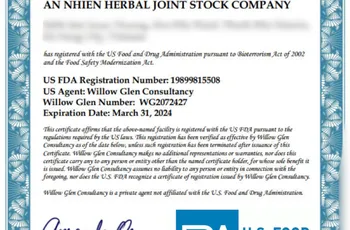
Sample of GRS Certification
Documented Information Required for the Global Recycled Standard (GRS) System:
- Depending on the scale and nature of the organization’s production activities, the GRS system may be integrated with other management systems such as ISO 9001, ISO 14001, ISO 45001, SMETA, etc., or established as a standalone set of procedures and controls specifically for the Global Recycled Standard (GRS).
- GRS Manual;
- Organizational chart and definition of responsibilities related to recycled materials;
- Procedure for identification, control, and traceability of recycled materials;
- Chemical management procedure for recycled materials;
- Corrective and preventive action procedure for recycled materials;
- Training and competence procedure related to recycled materials;
- Procedure for controlling recycled materials from raw material suppliers;
- Procedure for sourcing recycled materials from GRS-certified organizations;
Reasons to Choose GRS Consulting & Training Services at Napha:
- Napha is a consulting and training organization with extensive experience in delivering professional consulting and training services, supporting enterprises in building, implementing, and successfully achieving certification in both Vietnamese and international standards.
- By choosing Napha’s Global Recycled Standard (GRS) consulting and training services, clients are provided with high-quality solutions delivered by a dedicated and highly experienced team of consultants and experts, with a strong focus on continuous capacity building and improvement.
- Professional GRS consulting and training delivered by highly experienced experts with dedicated guidance;
- Strong understanding of client needs, with a commitment to effectiveness and on-time delivery in line with enterprise requirements;
- Provision of free sample documentation (manuals, procedures, guidelines, etc.);
- Reasonable costs and secure payment terms aligned with the enterprise’s objectives;
- Flexible consulting and training schedules adapted to the client’s production and business operations;
- A wide range of consulting and training service packages tailored to the specific criteria and requirements of each enterprise;
- Commitment to a 100% certification success rate;
- Cooperation with reputable GRS certification bodies to ensure certificates with appropriate national and international recognition.
CONTACT FOR FREE CONSULTING VIA HOTLINE: 0938.161.564
NAPHA CONSULTING CO., LTD
Địa chỉ: 3 Floor, An Phu Plaza, 117 - 119 Ly Chinh Thang Street, District 3, HCMC
Email: tuvannapha@gmail.com



main.comment_read_more