




What is WRAP?
WRAP (Worldwide Responsible Accredited Production) is the name of an organization that accredits social responsibility in global manufacturing.
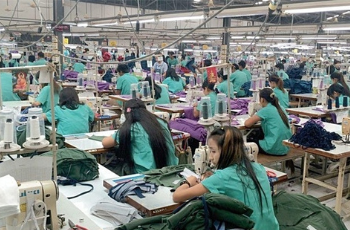
WRAP was established with the goal of creating an independent and objective organization to help garment and footwear factories around the world verify that they operate in compliance with local laws and internationally accepted standards for ethical workplace practices.
In the mid-1990s, a series of reports revealed labor exploitation in many garment factories worldwide, including excessive working hours, unsafe working conditions, and the denial of certain legal benefits required for workers. Recognizing that such conditions could threaten the entire apparel industry, the American Apparel Manufacturers Association (now the American Apparel & Footwear Association) proposed the initiative to establish an independent third-party organization—free from government or corporate influence—to identify and reduce exploitative labor conditions in factories worldwide.
WRAP was officially established in 2000.

WRAP Implementation Consulting
The 12 Principles of WRAP
To help you understand the WRAP Code of Conduct, NAPHA Consulting would like to introduce the translated version of the 12 WRAP Principles as follows:
The WRAP Principles are based on internationally accepted standards, workplace regulations, and the national laws of the countries where factories operate. They also incorporate the spirit and language of relevant conventions of the International Labour Organization (ILO).
1. Compliance with Laws and Workplace Regulations
All factories must fully comply with legal requirements and regulations in their industry according to local and national laws where business operations take place, as well as applicable international regulations. These include labor laws and general business laws, including ethical standards on anti-corruption, transparency, and environmental protection.
2. Prohibition of Forced Labor
Factories must maintain employment on a voluntary basis. They must not use forced, prison, bonded, or trafficked labor. Workers must be hired under lawful employment contracts and must not be subject to coercion, such as financial penalties or withholding personal documents when leaving employment.
3. Prohibition of Child Labor
Factories must ensure they do not employ child labor, including internationally recognized forms of child labor. No worker may be hired below the legal minimum working age and not younger than 14 years old, even if permitted by law. Factories must also comply with compulsory education laws and ensure that young workers (between the minimum working age and 18 years old) are not assigned hazardous work.
4. Prohibition of Harassment or Abuse
Factories must ensure that the workplace is free from harassment, abuse by management or coworkers, or any form of corporal punishment.
5. Wages and Benefits
Factories must ensure workers are properly compensated for their work by paying wages and benefits in accordance with local and national laws. This includes overtime pay, holiday pay, and legally required benefits such as social insurance.
6. Working Hours
Daily and weekly working hours must not exceed the limits set by national law. Workers must be provided with at least one day off after six consecutive working days, except in special emergency situations.
7. Prohibition of Discrimination
Factories must ensure that recruitment, wages, promotion, and termination are based solely on an employee’s ability to perform the job and not on personal characteristics or religious beliefs.
8. Health and Safety
Factories must provide workers with a safe and healthy working environment. If dormitories are provided, they must also be safe and hygienic.
9. Freedom of Association and Collective Bargaining
Factories must recognize and respect workers’ legal rights to freedom of association and collective bargaining.
10. Environment
Factories must comply with environmental laws, regulations, and standards applicable to all locations where business operations and production take place.
11. Customs Compliance
Factories must comply with customs laws and establish programs to ensure compliance with regulations related to the illegal transportation or transshipment of finished products.
12. Security
Factories must maintain security procedures to prevent the export of undeclared shipments such as narcotics, toxic biological or chemical substances, explosives, or other illegal goods. Factories must implement adequate controls to prevent illegal cargo. In this regard, WRAP recognizes the C-TPAT Foreign Manufacturer Guidelines of the U.S. Customs and Border Protection (CBP) as best practice.
WRAP Certification Process
1. Register for WRAP Certification
2. Self-Assessment Before the Official Audit
Facilities must complete a self-assessment before the facility audit to demonstrate that they have implemented social compliance practices for at least 90 days (for new facilities).
3. Select a WRAP-Accredited Monitoring Organization
After submitting the self-assessment, the facility selects a WRAP-accredited monitoring organization to audit the facility according to the 12 WRAP Principles. The audit must be completed within 6 months after registration fees are paid.
4. WRAP Audit
WRAP reviews the auditor’s report and decides whether to grant certification. If certification is not granted, the facility will be informed of necessary corrective actions and may undergo additional inspections.
5. WRAP Certification Levels
There are three WRAP certification levels: Platinum, Gold, and Silver.
Platinum Certification (Valid for 2 years)
Awarded to facilities that demonstrate full compliance with all 12 WRAP Principles for three consecutive certification audits, with no corrective actions or improvement observations required.
Gold Certification (Valid for 1 year)
This is the standard WRAP certification level, awarded to facilities that demonstrate full compliance with the 12 WRAP Principles.
Silver Certification (Valid for 6 months)
Facilities may receive Silver certification if they show substantial compliance with the 12 WRAP Principles but still have minor non-compliance issues in policies, procedures, or training that must be corrected.
Facilities must not have any “red flag” violations such as child labor, forced labor, serious health and safety issues, or employee abuse.
WRAP Certification Revocation Policy
WRAP-certified facilities must fully comply with the 12 WRAP Principles during the certification period. Certification may be revoked in the following cases:
- Violations related to Zero Tolerance policies
- Refusal to allow Post-Certification Audits (PCA)
- Failure to implement corrective actions required after PCA
- Failure to correct non-compliance issues in a timely manner
WRAP Zero-Tolerance Policy
If WRAP becomes aware that a factory participating in the WRAP program is involved in any of the following issues, the factory will automatically lose certification and be permanently banned from the WRAP program:
- Intentional and ongoing human rights violations, including:
- Child labor or the worst forms of child labor
- Forced labor
- Inhumane treatment or abuse
- Unethical actions that compromise the integrity or independence of auditors
- Threats of physical harm to the audit team
- Misrepresentation or falsification of certificates or audit reports
- Concealing production areas or processes during audits
WRAP Consulting Services
Instead of spending time, effort, and money to gain the knowledge required to build a management system, you can contact NAPHA Consulting. Our consulting and training experts already have the knowledge and experience you need.
From the perspective of a manager or business leader who wants their company to grow continuously and enhance its brand value, NAPHA Consulting understands your needs and will help you successfully establish and implement a social responsibility management system according to WRAP standards.
CONTACT FOR FREE CONSULTING VIA HOTLINE: 0938.161.564
NAPHA CONSULTING CO., LTD
Địa chỉ: 3 Floor, An Phu Plaza, 117 - 119 Ly Chinh Thang Street, District 3, HCMC
Email: tuvannapha@gmail.com


main.comment_read_more