




HO CHI MINH CITY’S 2026–2030 PRODUCTIVITY AND QUALITY IMPROVEMENT PLAN: WHAT SHOULD BUSINESSES PREPARE?
Ho Chi Minh City is implementing a 2026–2030 plan to improve productivity and quality. Learn about the role of ISO standards, ISO certification, and NAPHA’s ISO consulting services for businesses.
On August 28, 2026, the Conference on Implementing Productivity and Quality Improvement Activities Based on Science, Technology, and Innovation in Ho Chi Minh City was held, with a focus on encouraging businesses to adopt science and technology, standards, management systems, and improvement tools to enhance productivity, quality, and competitiveness.
This is not simply a matter of labor productivity. It also reflects a clear trend: businesses in Ho Chi Minh City need to progressively standardize their management, production, and quality systems in accordance with national and international standards in order to improve operational efficiency and meet increasingly demanding market requirements.
According to the plan presented at the conference, the City aims to provide guidance and support on productivity and quality improvement solutions to at least 1,000 businesses during the 2026–2030 period. The plan also seeks to strengthen the capacity of conformity assessment organizations to meet international standards.
From the perspective of a management systems consulting firm, NAPHA Consulting considers this an opportune time for businesses to review their existing management systems and take proactive steps toward standardizing their operations in line with standards that are appropriate to their industry, scale, and development objectives.
1. What Are the Key Highlights of Ho Chi Minh City’s 2026–2030 Productivity and Quality Improvement Plan?
The “Plan for Improving Productivity and Quality Based on Science, Technology, and Innovation in Ho Chi Minh City for the 2026–2030 Period” was issued under Decision No. 2127/QD-UBND, dated October 14, 2025, by the Ho Chi Minh City People’s Committee.
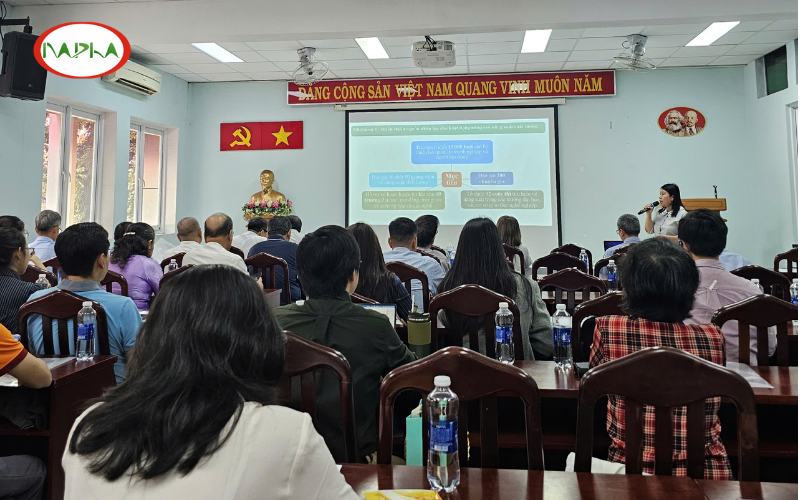
Key Highlights of Ho Chi Minh City’s “Productivity and Quality Improvement Plan for the 2026–2030 Period”
The overall objective of the plan is to make productivity a key driver of development through:
- Applying the latest advances in science and technology;
- Adopting advanced management systems;
- Implementing productivity improvement tools;
- Developing and strengthening human resources;
- Improving labor productivity and Total Factor Productivity (TFP);
- Enhancing the quality of products and goods, as well as the competitiveness of businesses.
Notably, the plan identifies the adoption of standards, technical regulations, management systems, and improvement tools as key solutions for enhancing productivity and quality.
Specific Objectives for the 2026–2030 Period
Key objectives include:
- Providing guidance and support on productivity and quality improvement solutions to at least 1,000 businesses;
- Providing training and capacity-building programs for 15,000 business leaders, managers, and employees;
- Training and certifying approximately 200 productivity specialists;
- Strengthening the capacity of conformity assessment organizations to meet international standards.
These objectives highlight the growing importance of standardizing management practices and strengthening internal capabilities as an integral part of businesses’ long-term development strategies.
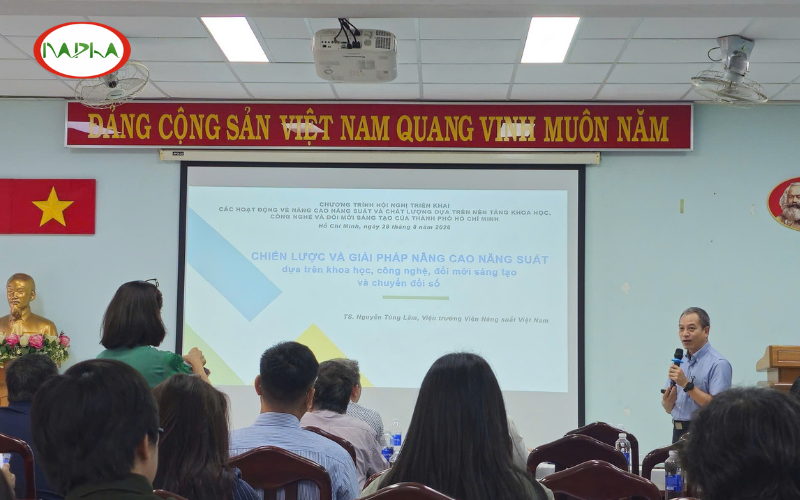
Strategies and Solutions for Improving Productivity through Science and Technology, Innovation, and Digital Transformation
2. What Areas of Support Are Businesses in Ho Chi Minh City Expected to Receive?
One notable aspect of the plan is its focus on supporting businesses in adopting standards, technical regulations, management systems, and productivity and quality improvement tools.
Under the 2026 plan, at least 100 businesses will receive support. This support includes guidance on implementing management systems, basic productivity and quality improvement tools, as well as sector- and industry-specific systems and tools.
In particular, the plan directly addresses the following areas:
- Traceability systems;
- Good Agricultural Practices (G.A.P.) and organic farming practices;
- Green productivity;
- The application of information technology and digital technologies;
- Smart manufacturing and smart services;
- Product and goods certification;
- Food safety management system certification;
- Environmental management system certification;
- Energy management system certification;
- Occupational health and safety management system certification;
- Traceability system certification in accordance with national and international standards.
This is a point that businesses should pay particular attention to: ISO certification should not be viewed simply as a “certificate,” but rather as the outcome of a process through which a business standardizes, controls, and continually improves its management system.
3. What Role Does ISO Play in Improving Productivity and Quality?
In our experience of consulting with businesses, one of the effective approaches to standardizing management practices is to develop and implement management systems in accordance with relevant ISO standards.
Depending on their industry and specific needs, businesses may consider the following management systems:
ISO 9001 – Quality Management System
Suitable for businesses seeking to standardize their processes, control product and service quality, improve customer satisfaction, and establish a consistent management system.
ISO 14001 – Environmental Management System
Suitable for businesses that need to manage their environmental aspects, comply with applicable legal and customer requirements, and move toward more sustainable production and operations.
ISO 45001 – Occupational Health and Safety Management System
Helps businesses establish a systematic approach to managing occupational health and safety hazards and risks.
ISO 22000 / HACCP – Food Safety Management System
Particularly suitable for businesses involved in food production, processing, and trading, as well as organizations operating within the food supply chain.
ISO 27001 – Information Security Management System
Suitable for businesses that need to manage information security risks, protect data, and meet the requirements of customers and business partners.
ISO 50001 – Energy Management System
Supports businesses in establishing a systematic approach to managing and improving energy performance and energy efficiency.
In addition to the standards above, businesses may need to adopt other industry-specific standards or management systems depending on their sector, operational requirements, and business objectives.
4. Why Should Businesses Not Simply “Implement ISO to Obtain Certification”?
This is a question we frequently encounter when consulting with businesses.
An effective ISO management system does not begin with “preparing documents for an assessment.” It begins with the business asking and addressing a series of fundamental questions:
What issues are we managing? → Where are the risks? → Which processes need to be standardized? → Who is responsible? → How should they be controlled? → How should results be measured? → How can we improve?
When properly implemented, a management system can help businesses:
- Standardize processes;
- Clearly define roles and responsibilities;
- Identify and control risks;
- Reduce errors and waste;
- Improve operational consistency and stability;
- Enhance the ability to meet customer requirements;
- Establish a foundation for continual improvement;
- Support compliance with supply chain requirements.
This approach is aligned with the direction of Ho Chi Minh City’s plan, which emphasizes the application of advanced management systems, productivity improvement models, and tools in business operations.
5. What Should Businesses Prepare for ISO Implementation?
If your business is considering ISO consulting and certification, we recommend following five basic steps.
Step 1: Define Your Objectives
Businesses should clearly identify the reasons for implementing an ISO management system:
- To meet customer requirements?
- To participate in supply chains?
- To standardize the management system?
- To improve productivity?
- To manage risks?
- To expand into new markets?
- To meet tender requirements or the requirements of international business partners?
The clearer the objectives, the more appropriate the scope and choice of standard will be.
Step 2: Select the Appropriate Standard
Not every business needs to implement the same standard.
For example:
Manufacturing businesses → ISO 9001 / ISO 14001 / ISO 45001
Food businesses → ISO 22000 / HACCP / FSSC 22000
Technology and data-driven businesses → ISO 27001
Businesses seeking to manage energy performance → ISO 50001
In many cases, businesses can develop an integrated management system to reduce duplication and improve management efficiency.
Step 3: Conduct a Gap Assessment
This is an important step before developing the management system.
The consultant should assess the business’s existing:
- Processes;
- Records and documentation;
- Policies;
- Objectives;
- Roles and responsibilities;
- Operational controls;
- Risk assessment processes;
- Legal and regulatory compliance controls;
- Internal audit activities;
- Improvement activities.
Step 4: Develop and Implement the Management System
The management system should be developed based on the business’s actual operations rather than by simply copying a pre-existing set of documents.
The business then needs to implement the system, train personnel, establish evidence of implementation, and evaluate the effectiveness of the system.
Step 5: Apply for Certification
Once the management system has been developed and implemented, the business can apply for certification through an appropriate certification body.
An important distinction should be made:
ISO consulting and ISO certification are two separate activities.
The consulting organization supports the business in developing and implementing its management system, while the certification body conducts an independent assessment to determine whether the system meets the requirements of the applicable standard.
6. How Can NAPHA Consulting Support Businesses?
From a consulting perspective, NAPHA Consulting focuses on helping businesses develop management systems that are aligned with their actual operations, rather than focusing solely on documentation.
NAPHA’s consulting services can support businesses throughout the following activities:
1. Initial Survey and Gap Assessment
Identifying the gaps between the business’s existing management system and the requirements of the applicable standard.
2. Management System Development Consulting
Developing documentation, processes, and control methods that are appropriate to the business’s scope of operations.
3. Awareness Training
Helping management and employees understand the objectives, requirements, and their respective roles within the management system.
4. Internal Auditor Training
Providing businesses with the knowledge and skills needed to independently evaluate their management system.
5. Implementation and Improvement Support
Supporting businesses throughout the implementation process, addressing nonconformities, and improving management system effectiveness.
6. Certification Audit Preparation
Helping businesses review and strengthen their management system before working with a certification body.
7. What ISO Consulting Services Does NAPHA Offer?
Depending on their needs and areas of operation, businesses can consider the following NAPHA consulting services:
- ISO 9001 Consulting – Quality Management System;
- ISO 14001 Consulting – Environmental Management System;
- ISO 45001 Consulting – Occupational Health and Safety Management System;
- ISO 22000 Consulting – Food Safety Management System;
- HACCP Consulting;
- FSSC 22000 Consulting;
- ISO 27001 Consulting – Information Security Management System;
- ISO 50001 Consulting – Energy Management System;
- IATF 16949 Consulting for the automotive industry;
- 5S – Kaizen, Lean Six Sigma, RCA, TQP, and other productivity and quality improvement tools.
For businesses with multiple objectives, NAPHA can also provide consulting on integrated management systems, such as ISO 9001 + ISO 14001 + ISO 45001, helping optimize the resources required for implementation.
8. From Productivity Improvement to Enhanced Competitiveness
The most important takeaway for businesses from Ho Chi Minh City’s productivity and quality improvement plan is not simply the adoption of “another standard.”
It represents a shift in management thinking:
Experience-based management → System-based management → Data-driven management → Continual improvement → Higher productivity and competitiveness.
The City’s plan also encourages businesses to apply digital technologies to establish, optimize, and modernize their management systems, while adopting standards and tools that support smart manufacturing and smart services.
In particular, the plan links business support with the requirements of supporting-industry development programs and relevant international certifications to meet global supply chain requirements in sectors such as automotive, electronics, and aerospace.
Therefore, standardizing the management system today can provide a foundation for businesses to become better prepared for future customer and supply chain requirements.
9. Where Should Businesses Start?
If your business operates in Ho Chi Minh City and has one or more of the following needs:
- Implementing ISO for the first time;
- Preparing to participate in a supply chain;
- Meeting a customer’s ISO certification requirements;
- Standardizing the management system;
- Improving productivity and quality;
- Integrating multiple ISO management systems;
- Transitioning from manual management practices to a more systematic management approach;
the first step does not necessarily have to be developing a complete set of ISO documentation.
Instead, the first step should be to properly assess the business’s needs and current situation.
Based on this assessment, the business can then select the appropriate standard, define the scope of application, develop an implementation roadmap, and estimate the required resources more effectively.
NAPHA – Supporting Businesses in Building Effective Management Systems
As Ho Chi Minh City promotes productivity and quality improvement through science, technology, and innovation, businesses need to take a more proactive approach to standardizing their management practices and strengthening their competitiveness.
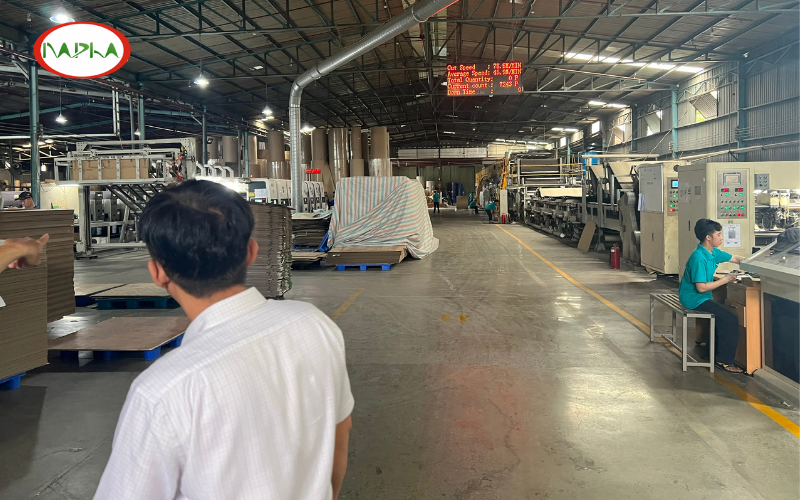
NAPHA conducts on-site consulting at a customer’s packaging manufacturing facility for ISO 9001 implementation.
NAPHA is proud to have supported businesses over the years through ISO consulting, management system development, and productivity and quality improvement solutions.
Our consulting approach is guided by four principles:
Standards-compliant – Practical – Easy to implement – Sustainable and continuously improvable.
If your business is looking for ISO consulting services, management system development consulting, or productivity and quality improvement solutions, NAPHA can support you in assessing your current situation, selecting the appropriate standards, and developing a practical implementation roadmap tailored to your business needs.
CONTACT FOR FREE CONSULTING VIA HOTLINE: 0938.161.564
NAPHA CONSULTING CO., LTD
Địa chỉ: 3 Floor, An Phu Plaza, 117 - 119 Ly Chinh Thang Street, District 3, HCMC
Email: tuvannapha@gmail.com


main.comment_read_more